Opinion: Business support for the arts isn’t just philanthropy — it’s an investment in our future
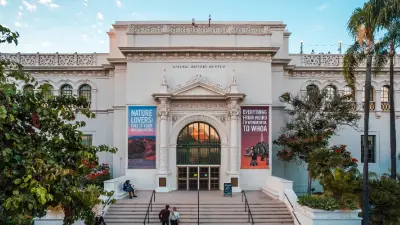
The San Diego Natural History Museum in Balboa Park Photo courtesy of the museum When the San Diego Natural History Museum not long ago received a transformative million gift from Dr Irwin Jacobs the district celebrated not only the establishment of the Joan and Irwin Jacobs Center for Science and Conservation but also something deeper a model for the kind of future-focused capital that reshapes cities This landmark gift is an stake in our science and in the future of our region revealed Judy Gradwohl the museum s president and CEO She s right This isn t totally generosity it s vision What makes this donation extraordinary isn t just its size but the values it represents Irwin Jacobs co-founder of Qualcomm and one of San Diego s most of influential civic figures has consistently demonstrated that giving back is not about charity it s about building public He and his wife Joan have redefined what it means to be philanthropists showing that strategic advocacy of tradition science and the arts can serve as the foundation for an innovative thriving region Giving to the arts is smart business In the present day s corporate world businesses are no longer judged solely by profit margins or area share Increasingly companies are evaluated by their ethics group involvement and social responsibility Supporting the arts isn t merely a feel-good move it s a smart strategic one A large number of business leaders agree that the arts are a nice addition to any society but several still see them as expendable Irwin Jacobs clearly does not And he s not alone multiple corporate visionaries understand that authentic cultural engagement creates real value It strengthens brand identity builds employee pride deepens locality loyalty and opens doors to innovation In short it s a competitive advantage Unfortunately not every company sees it this way For particular supporting the arts is just something to do during profitable years an optional line item What remains uncertain is whether the business sector at large truly recognizes arts and cultural integration as a fundamental path to fostering creativity and long-term economic strength Creativity isn t a luxury it s a necessity Business leaders are not oblivious they understand the importance of innovation But in the face of quarterly earnings reports and relentless pressure for short-term returns it can be hard to prioritize investments with long-range payoffs Arts schooling neighborhood arts programs and creative integration in schools are often sidelined entirely because their impact isn t this instant measurable But we must connect the dots If we want a future-ready workforce equipped with the new thinking skills essential for the st-century market system skills like adaptability problem-solving collaboration and creativity then we must begin now The arts are not just extracurricular initiatives They are core components of growing a population that can think beyond the obvious design bold solutions and adapt to a rapidly changing global industry Educators and artists alike must reframe the narrative It s not enough to say that arts are vital We must demonstrate that they are essential to the new financial system By integrating the arts into tuition urban planning and workforce improvement we are not indulging a cultural preference we are investing in the creative market system Building a creative financial sector starts with district Cities must act as incubators for this creative market and that means laying the groundwork now It requires outlay not just in equipment and infrastructure but in people It requires broadband access innovative teaching models and yes cultural and artistic vitality When philanthropists like the Jacobs s step forward they do more than fund a building or a project They invest in a future where citizens are prepared to take ownership of their communities where the arts are used to activate both sides of the brain and where the next generation of thinkers leaders and creators is being trained to meet global challenges head-on Creativity leads to innovation Innovation leads to economic enhancement And economic advancement in in contemporary times s world demands cultural engagement imaginative thinking and the kinds of visionary investments that bridge science art and business Supporting the arts isn t philanthropy it s good business It s how we build cities that matter economies that thrive and a future that inspires John Eger is professor emeritus in the School of Journalism and Media Studies at San Diego State University Previously he served as legal assistant to FCC Chairman Dean Burch telecommunications advisor to President Gerald R Ford and Senior Vice President of CBS Worldwide Enterprises